Ceramic Cake Pan Explained: A UK Buyer's Guide
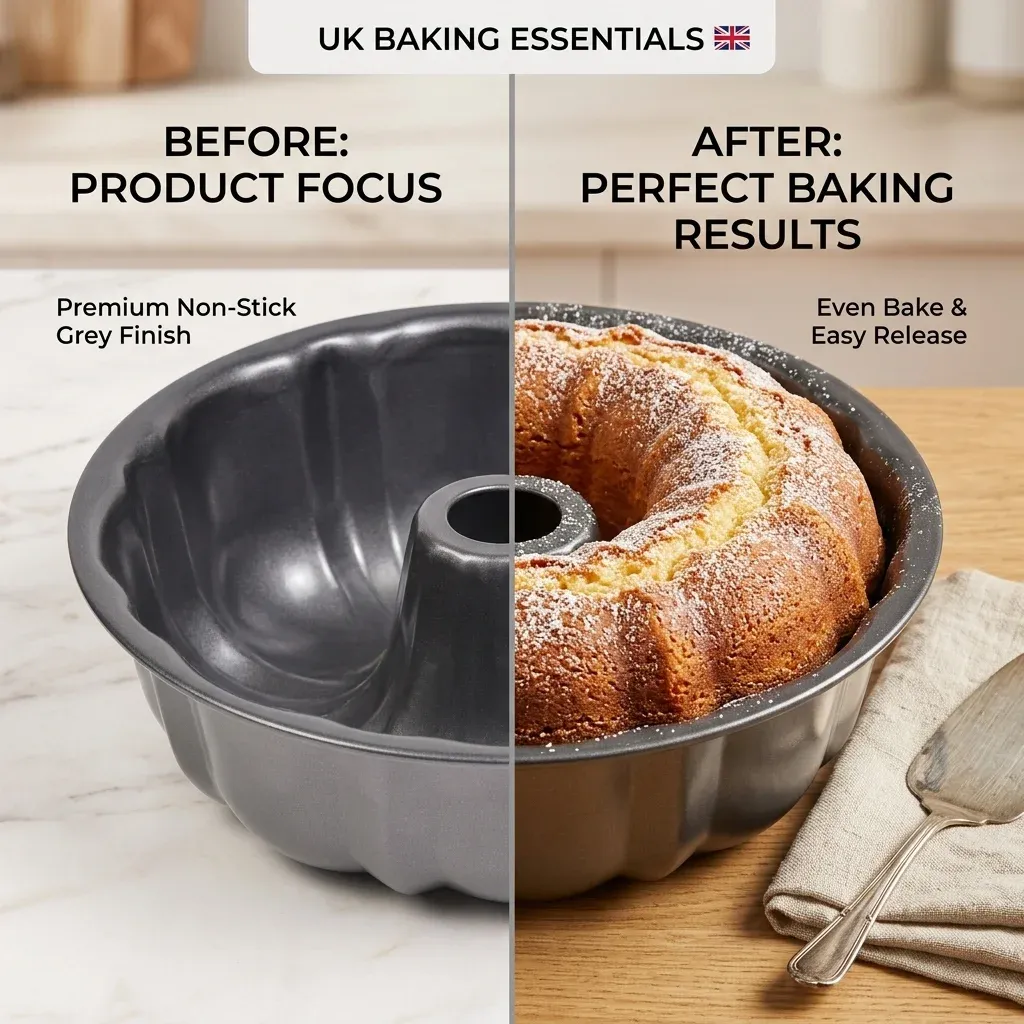
Short answer: a ceramic cake pan usually means a metal tin finished with a ceramic non-stick coating, rather than solid fired clay, chosen by bakers who want easy release without the PTFE and PFOA chemistry of older non-stick. If you are replacing a scratched, flaking tin because you worry about what ends up in the cake, a good ceramic coating is a sensible, food-safe upgrade, as long as you look after it.
What a ceramic cake pan actually means
Two very different things get called ceramic. One is a fully ceramic or stoneware baking dish. The other, far more common for cake tins, is a metal pan finished with a ceramic-based non-stick coating. For fluted cakes you almost always want the second kind: the metal body gives even heat and holds a defined shape, while the ceramic layer gives the clean release that keeps the pattern intact.
Why safety-conscious bakers choose ceramic
The usual trigger is an older non-stick tin whose coating has started to scratch and flake, and simply not wanting those flakes, or the PTFE and PFOA chemistry behind many traditional coatings, anywhere near cakes you bake for the family. That is a reasonable instinct, and it is why ceramic has become the go-to for anyone who reads the label before they buy.
Modern ceramic coatings are made to be PTFE-free and PFOA-free and food-contact safe. Our Fluted Cake 9.5 inch pan uses exactly this kind of coating over an aluminised steel body, and is oven-safe up to 288°C / 550°F. The honest caveat: the words “ceramic” and “non-toxic” are used loosely in marketing, so what matters is a clear PTFE-free and PFOA-free statement, food-contact compliance and a sensible temperature limit, not the label alone.
What to check before you buy a ceramic cake pan
- Coating claims stated plainly: look for PTFE-free, PFOA-free and food-contact safe in writing.
- Oven temperature limit: ours is 288°C / 550°F, which covers normal cake baking with headroom.
- Depth and capacity: confirm it suits your recipes (ours is 9.5 inch / 24.1 cm, about 2.4 litres).
- Care instructions: hand washing, no metal utensils and no abrasive scourers keep the coating intact.
Looking after a ceramic coating so it stays safe
Ceramic coatings last longest with gentle care: a soft sponge, no metal tools, and letting the pan cool before washing. Just as important, replace any tin, ceramic or otherwise, once the coating is chipped, blistered or flaking, rather than baking on a damaged surface. That is the honest limit here: ceramic is easier and cleaner to live with, not indestructible.
For the release side of the story see our non stick cake pan guide, and for the overall recommendation see the bundt cake baking pan review.
Our ceramic pick
The Fluted Cake 9.5 inch fluted ceramic bundt pan is £19.17 (RRP £30.67), with a PTFE-free, PFOA-free ceramic coating on aluminised steel, an on-file rating of 4.7 from 166 reviews, free UK delivery over £40 and 30-day returns.
Frequently Asked Questions
Is a ceramic cake pan safe / non-toxic?
A quality ceramic coating is made to be PTFE-free and PFOA-free and food-contact safe, which is why safety-conscious bakers choose it; always check the maker states this clearly and keep to the stated oven limit.
What is the difference between a ceramic pan and a normal non-stick pan?
Traditional non-stick usually relies on PTFE-based coatings, while a ceramic coating is a mineral-based non-stick made PTFE-free and PFOA-free that still gives easy release.
Can a ceramic cake pan go in the dishwasher?
Hand washing with a soft sponge is best to protect the coating; avoid metal utensils and abrasive scourers, and let the pan cool before washing.
When should I replace a ceramic cake pan?
Replace it once the coating is scratched through, chipped, blistered or flaking, rather than continuing to bake on a damaged surface.
Ready to bake a showstopper with Fluted Cake?
Shop the Fluted Cake Ceramic Bundt Pan — £19.17