Non Stick Cake Pan Explained: A UK Buyer's Guide
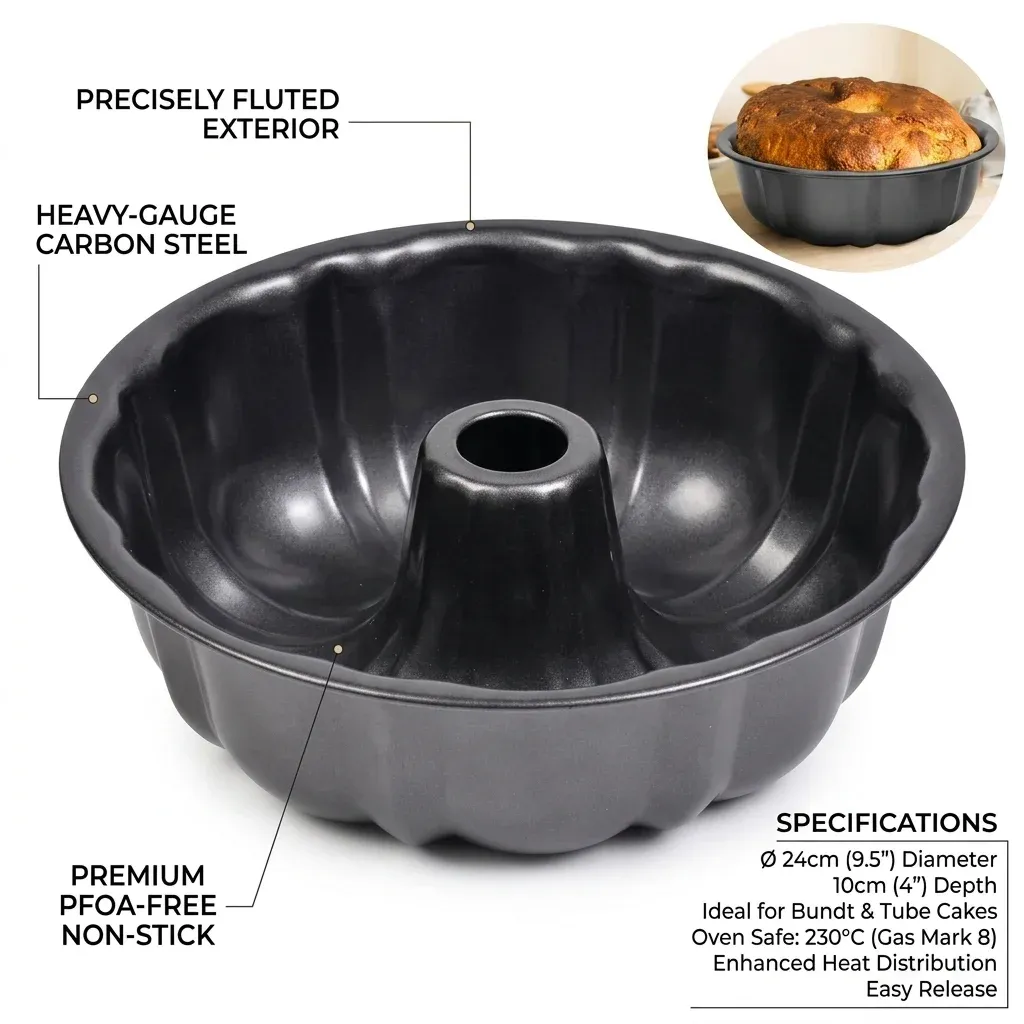
Short answer: a good non stick cake pan is the difference between a cake that drops out cleanly and one that leaves half its pattern stuck in the tin. If a previous bundt tore on the way out, the fix is a dependable ceramic non-stick surface plus the right release routine: grease the flutes, cool for 10–15 minutes, then turn out.
What a non-stick coating does, and what it does not
If you once attempted a fluted cake and watched it stick in the deepest grooves so a lovely cake came out in pieces, you know the problem is worst exactly where a bundt is prettiest. A non-stick coating reduces how firmly batter grips the tin, which matters most in that fine flute detail. What it does not do is replace good technique. Think of the coating as stacking the odds firmly in your favour, not as a magic wand.
Choosing a non stick cake pan that actually releases
Look for an even, well-bonded coating (ceramic coatings are made PTFE-free and PFOA-free), a shape suited to the job, a clear temperature limit, and honest care instructions. A decorative pan is only worth buying if it turns out cleanly time after time.
Our Fluted Cake 9.5 inch pan uses a ceramic non-stick coating over aluminised steel and is oven-safe to 288°C / 550°F, chosen so that even a first attempt releases cleanly from the flutes.
The release routine that stops cakes sticking
- Grease the flutes: even with non-stick, brush softened butter or a neutral oil into every groove; a pastry brush reaches the detail a spray misses. For very sticky batters like ginger or toffee, add a light dusting of flour after greasing.
- Do not overfill: leave room to rise so the top, which becomes the cake’s base, stays level and turns out flat.
- Cool, then turn out: rest the tin for 10–15 minutes, not much longer, or trapped steam can re-stick it, then invert onto a rack.
- Skip aerosol baking sprays: they can build a sticky residue in the grooves over time that actually makes release worse.
Honest limits
Even the best non stick cake pan will disappoint if the cake is turned out too hot or stone cold, or if the flutes were left ungreased. Treat the coating as a big help rather than a guarantee, and stop using any tin once the surface is chipped or peeling.
For the coating and material-safety side see our ceramic cake pan guide, and for the overall recommendation see the bundt cake baking pan review.
Our easy-release pick
The Fluted Cake 9.5 inch fluted ceramic bundt pan is £19.17 (RRP £30.67): a ceramic non-stick surface, a 2.4 litre size, a light 780 g body, an on-file rating of 4.7 from 166 reviews, free UK delivery over £40 and 30-day returns.
Frequently Asked Questions
Why does my cake stick in a non stick cake pan?
Usually the flutes were not greased, the pan was overfilled, or the cake was turned out too hot or too cold; grease the detail, cool for 10 to 15 minutes, then invert.
Do you still grease a non stick cake pan?
Yes, especially a fluted one; a light brush of butter or oil in the grooves, plus a dusting of flour for sticky batters, gives the cleanest release.
Is a ceramic non-stick coating good for beginners?
Yes; a ceramic coating is made PTFE-free and PFOA-free and releases easily, so a newer baker gets consistent results with basic greasing.
How do I keep a non stick cake pan working?
Hand wash with a soft sponge, avoid metal utensils and abrasive scourers, and replace the pan if the coating chips or flakes.
Ready to bake a showstopper with Fluted Cake?
Shop the Fluted Cake Non-Stick Bundt Pan — £19.17